
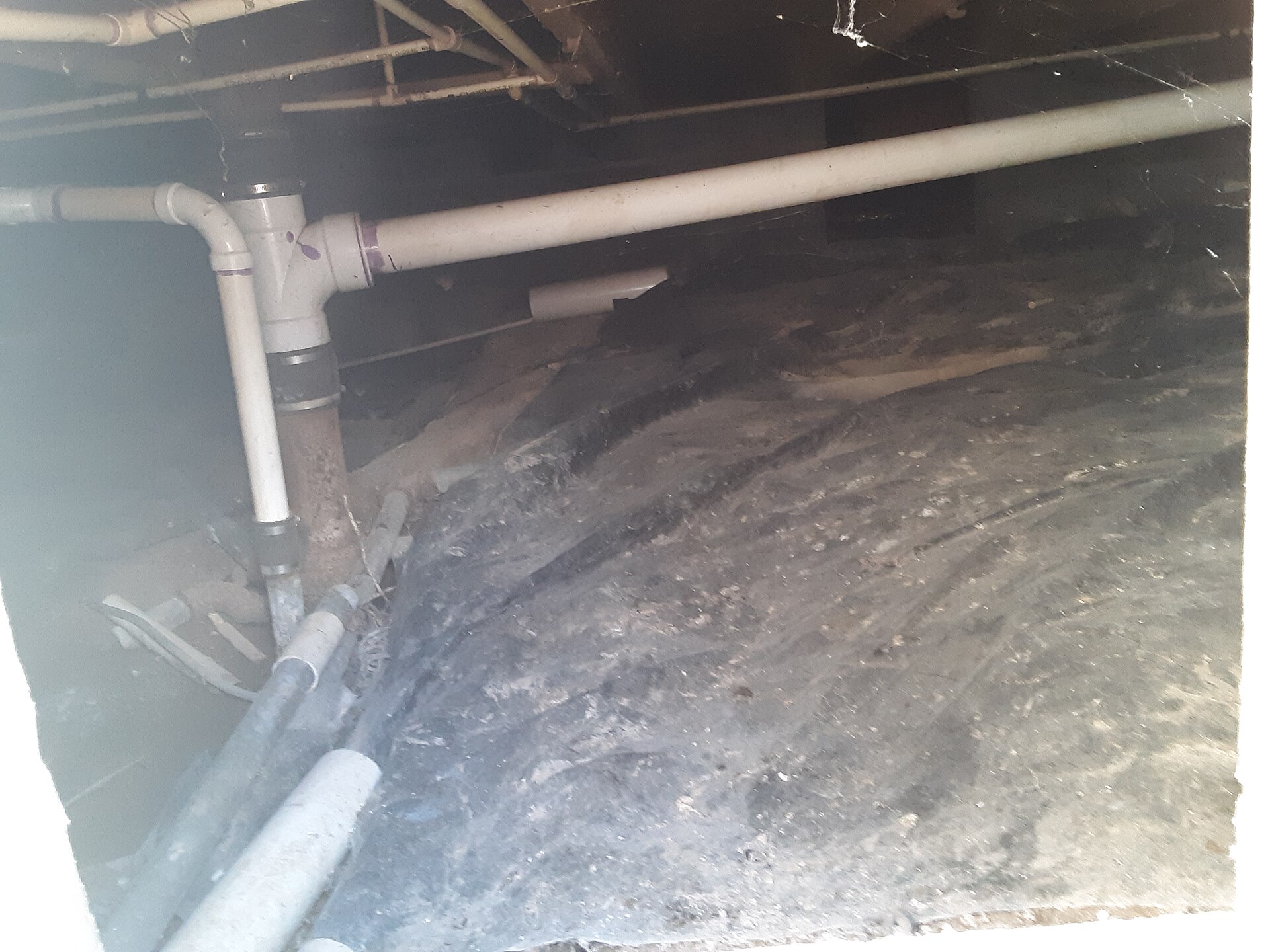
A Dirt Floor Is a Humidity Machine
Soil is never dry. Ground moisture evaporates upward continuously, and in an enclosed space under a house it has nowhere to go but into the floor system above — condensing on cold surfaces, soaking into joists and subfloor, and rising into the living space.
The symptoms present upstairs, which is precisely why this goes undiagnosed for years:
- A musty smell nobody can locate
- Humidity that will not come down in summer
- Floorboards cupping
- Cold floors in winter
- Mould on the underside of subfloor nobody has looked at
Why This Is So Common Here
The Lakes Region is full of buildings that were summer camps and are now houses. Alton Bay cottages, Meredith Neck properties, the Suncook lakeside stock, Squam camps — thousands of buildings originally on crawl spaces or piers, insulated and heated and occupied year-round over the last forty years.
Nothing about the crawl space changed. What changed is that there is now a heated, humidity-sensitive house sitting on top of it.
Add a high water table on much of that shoreline, add heavy shade that keeps everything slow to dry, and you have the single most common moisture situation in this region — and one that is almost never diagnosed from the rooms where it is noticed.
What Encapsulation Involves
Deal with standing water first
Sealing a vapour barrier over standing water traps the problem rather than solving it. If there is liquid water in the space, drainage and a pump come first — encapsulation goes on top of a space that is already dry.
Clear it out
Old fallen insulation, debris, and anything organic. Fibreglass batts hanging out of a damp crawl space ceiling are doing nothing except holding moisture, and they come out.
Vapour barrier across the ground
Heavy-gauge liner across the entire floor and up the walls and piers, with sealed seams. This is the part that stops the evaporation, and the sealing is what makes it work — a loose sheet of plastic is not encapsulation.
Seal and insulate the perimeter
Rim joists sealed, vents closed off, and the perimeter insulated so the space sits inside the building's thermal envelope rather than outside it.
Condition the space
Usually a dedicated dehumidifier with a condensate drain. The space is now part of the house, and it is treated accordingly.
- Vapour barrier sealed at seams, walls and piers
- Perimeter sealed and insulated
- Dehumidification sized to the space
- Standing water addressed before anything is sealed
- Existing insulation and debris removed properly
- Honest about access constraints before quoting
Cost: roughly $4,000–$12,000, with access and headroom moving the number more than square footage does. A tight Alton Bay crawl with two feet of clearance is a very different job from a walk-in space of the same area, and we will tell you which yours is before quoting.
Crawl Space Questions
Will it fix the smell upstairs?
Very often, and people are surprised how much. If the source is ground moisture evaporating from a dirt floor into the floor system, sealing that ground removes the source rather than masking it, and the change is usually noticeable within weeks. If the smell has a different source it will not — which is why we look before quoting rather than selling encapsulation as a general remedy.
Should I open or close my crawl space vents?
The old wisdom was to vent. In a humid New England summer that frequently backfires: warm moist outside air enters a cool crawl space and condenses on every cold surface in it, actively adding water. Current practice on encapsulated spaces is to seal and condition. If your space is not encapsulated, the answer is more situational — worth asking rather than guessing.
Can I just put plastic down myself?
You can, and it is better than nothing. What separates it from encapsulation is the sealing — seams taped, barrier run up the walls and piers and mechanically fastened, perimeter sealed. An unsealed sheet lying on the ground lets moisture around its edges and traps it underneath, which is a partial job with partial results.
Is a dehumidifier enough on its own?
It treats the symptom and runs forever. Dehumidifying a crawl space with an open dirt floor is pulling moisture out of a space that is continuously generating more — it works while it runs and costs electricity indefinitely. Sealing the ground removes the source; the dehumidifier then has a manageable job rather than an endless one.
What if there is mould already?
Remediation comes before encapsulation, and depending on extent that may be a specialist's job rather than ours. We will tell you honestly what we find and what order things need doing in. Sealing a space with active growth in it is the wrong sequence.