
For the Worst Week, Not the Average One
A pump adequate for a wet week in June can be hopelessly undersized during a rapid March melt on saturated, partly frozen ground. That melt is the event the pump is being bought for, so that is the event we size it against.
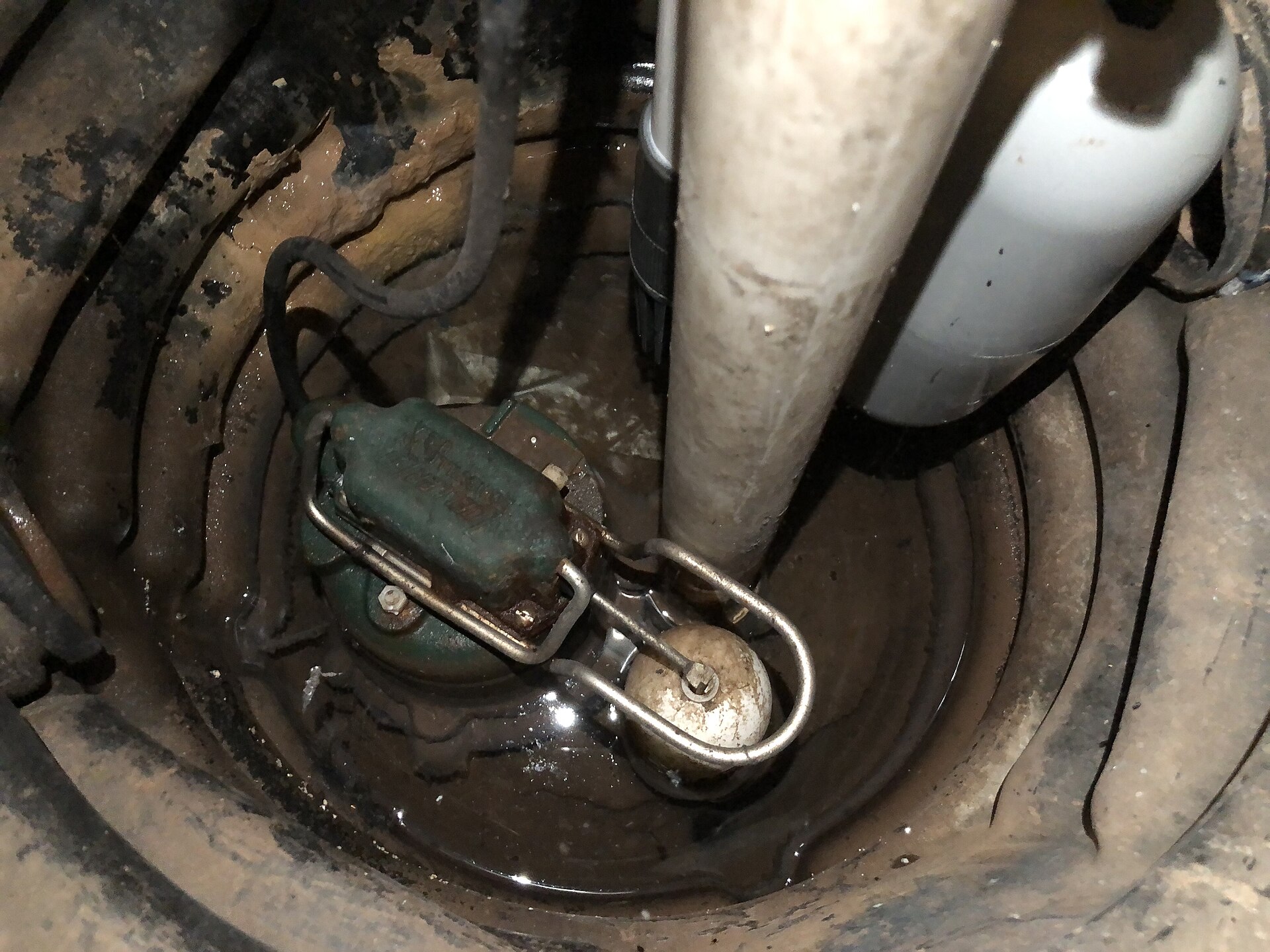
Real sizing depends on head height, discharge run and pit geometry as much as on the pump's nominal rating, which is why our sizing helper gives a capacity class rather than a false-precision gallons-per-hour figure. Anybody quoting you an exact GPH from a web form has skipped three of the variables.
Five Things Besides the Pump
Battery backup
Not an upsell. The weather that makes a sump necessary is the weather that takes the power out, and a Lakes Region March outage is routine rather than exceptional. Adds roughly $900–$2,000, and on seasonal property it is the most important line on the quote.
Where the discharge actually ends
A line ending six feet from the house returns water to the ground you just pumped it out of, and the pump cycles forever. Get it genuinely away, and downhill where the site allows. This is the most common installation fault we find on other people's work.
Freeze resistance
A discharge line frozen shut in February makes the pump an expensive noise. Proper fall on the line and a freeze-relief fitting where conditions warrant.
A check valve that seats
Without one, every cycle drops the column of water in the discharge line back into the pit, and the pump immediately runs again. It halves the pump's life and doubles the noise.
An alarm
Under $100. The difference between a wet evening you dealt with and a flood you discovered later. One that reaches your phone is transformative on seasonal property.
- Sized for the spring melt, not the average week
- Battery backup as standard on seasonal property
- Water alarm fitted so you find out at the time
- Discharge routed genuinely away from the foundation
- Freeze-resistant discharge for February
- Check valve and pit inlet done properly
What It Costs
| Work | Typical cost |
|---|---|
| Sump pump installation including pit | $1,200–$3,000 |
| Heavy-duty installation, larger basement | $2,200–$4,500 |
| Pump replacement only | $500–$1,100 |
| Battery backup system | $900–$2,000 |
| Water alarm | Under $100 |
| Discharge line extension / rerouting | $200–$900 |
| Exterior drainage — curtain drain | Quoted per site |
Sump Questions
Do I really need battery backup?
If the basement matters, yes, and we would rather be blunt than polite about it. The events that make a sump necessary cause outages. Without backup the pump is entirely reliable right up until the one night it is genuinely needed. On a seasonal property where nobody would know for weeks, it is not a close call at all.
How often should a sump pump be replaced?
Commonly every seven to ten years, sooner if it runs frequently. They fail without warning and under load. A pump near the end of its life is much better replaced on a dry Tuesday in September than discovered during a melt.
My sump runs constantly. Is that normal?
It means water is arriving constantly, which is worth understanding rather than tolerating. Genuinely high water table, a spring, a plumbing leak — or a discharge line ending close enough to the foundation that the pump is recycling its own output. Check that last one first; it is common and it costs nothing to look.
Can I install a sump pump myself?
Replacing an existing pump in an existing pit is within reach of a competent homeowner. Installing a new pit means breaking out concrete floor, getting the inlet and depth right, running a discharge properly and sorting the electrical supply — which is a different proposition. A poorly placed pit is a problem you live with permanently.
Where should the discharge go?
As far from the foundation as the site allows, downhill, and not into a place that channels it back. Not into a septic system, and in most cases not into a municipal sewer — many places prohibit it. Check local requirements, and check where a previous owner's line actually ends before assuming it is fine.